Workflow design | Pix2Code Editorial
Your Content Approval Process Is a Revenue Bottleneck: A Practical Redesign
The Hidden Cost of Content Approval Delays
Creative operations leaders face a critical operating decision daily. Should they launch a campaign with imperfect approvals? Or delay it for a perfect, yet late, sign-off? This is not a minor administrative hurdle. A slow content approval workflow directly translates into missed market opportunities and wasted creative resources. For VPs of Creative Operations and Marketing Operations Directors, this means balancing speed with compliance.
Approvals often arrive late, and comments frequently lose context. It becomes nearly impossible to tell if legal, brand, channel, or performance concerns are truly blocking launch. This fragmented creative review process creates a significant marketing approval bottleneck, slowing time to market.
Why Current Approval Models Fail
Many organizations adopt point tools for specific tasks. While these tools may speed up local steps, they often create slower end-to-end work. This happens because review comments and source evidence become detached from the core content asset. Without a connected system, teams cannot distinguish between generated output and approved output. This leads to confusion, rework, and, ultimately, delays.
Enterprise content teams consistently report workflow and approval processes among their most recurring operational challenges. These rank alongside silos and measurement. Source: Content Marketing Institute. A robust system for creative decision lineage is essential but often missing.
Redesigning for Speed and Certainty: A Risk-Tiered Approval Framework
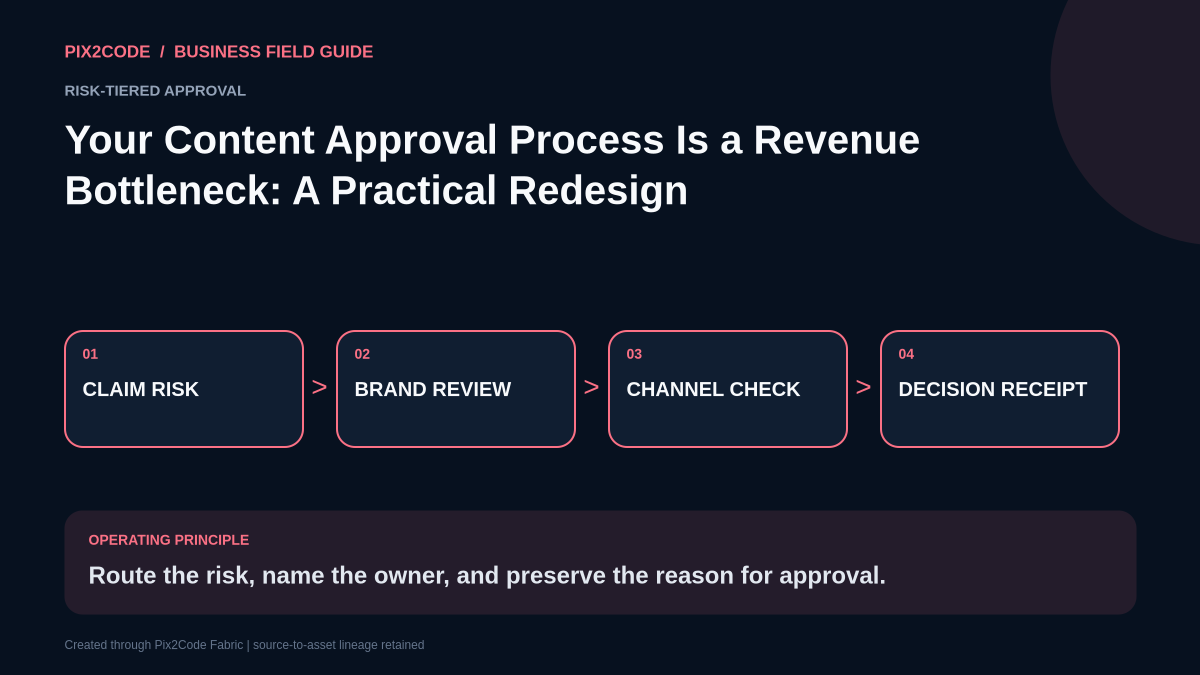
The solution isn't more tools or stricter rules. It's a strategic redesign of the content approval workflow, built around a risk-tiered model. This approach ensures appropriate scrutiny without stifling agility.
Here’s how to implement a practical, risk-tiered approval model:
Define Clear Risk Tiers
Categorize content based on its potential impact and visibility. This allows for tailored approval paths.
- Tier 1: High-Risk Content. This includes global campaigns, major product launches, regulatory communications, or content targeting sensitive demographics. These require comprehensive review from legal, brand, and executive stakeholders.
- Tier 2: Medium-Risk Content. This covers regional campaigns, significant social media initiatives, or new evergreen content. Reviews might involve functional leads and legal, but with a more streamlined process.
- Tier 3: Low-Risk Content. This typically includes minor updates to existing content, localized evergreen assets, or routine social media posts. Approvals can often be delegated to content managers or automated.
Assign Named Owners with Decision Evidence
Every approval step must have a named owner. This person is accountable for the decision. Crucially, each decision needs documented evidence. This evidence could be a comment thread, a linked policy document, or a direct sign-off. This creates a clear creative decision lineage.
Implement Strict Expiry Rules
Content approvals are not permanent. Market conditions, legal requirements, and brand guidelines evolve. Set clear expiry dates for all approved content. This forces regular re-evaluation and prevents outdated material from going live. For high-risk content, expiry might be quarterly. For low-risk content, it could be annual.
Establish Review Service-Level Agreements (SLAs)
Tie approval turnaround times to the campaign's value and urgency. A high-value, time-sensitive campaign needs a faster SLA than a routine update. Communicate these SLAs clearly to all stakeholders. Hold owners accountable for meeting them. This transforms a reactive bottleneck into a predictable process.
Your Approval Process Diagnostic Checklist
Before implementing a new system, assess your current state. Use this checklist to pinpoint weaknesses in your existing content approval workflow:
- Identify the specific person responsible for every "waiting for approval" status. If this is unclear, assign clear ownership now.
- Confirm review comments directly link back to the specific content element they address. If not, review context is likely lost.
- Ensure legal, brand, and channel guidelines are easily accessible and integrated into the review process. If they are not, these concerns will cause delays.
- Verify your teams can easily differentiate between a draft, a version under review, and a fully approved asset. If not, there is a risk of unapproved content launch.
- Define maximum turnaround times for each type of content review. If not, approvals will lack urgency.
- Establish a clear, auditable record of who approved what, and when. If not, you lack creative decision lineage.
- When a campaign is delayed, quickly determine the exact reason and owner of the bottleneck. If not, problem diagnosis is too slow.
- Ensure your system accounts for content expiry and automatic re-review or archival. If not, you risk publishing outdated material.
- Check if your point tools are integrated enough to prevent review comments and source evidence from becoming detached. If not, this creates inefficiencies.
A Decision Framework for Approval Prioritization
Applying a risk-tiered model requires a structured decision-making process. This framework helps VPs of Creative Operations and Content Operations Leads allocate resources effectively.
| Decision Factor | Low Risk | Medium Risk | High Risk |
|---|---|---|---|
| Content Type | Social post, minor blog update, internal memo | Regional campaign, new evergreen blog, email blast | Global campaign, regulatory announcement, major product launch |
| Approval Owners | Content Manager, Team Lead | Marketing Lead, Legal, Brand Manager | Executive, Legal, Brand Director, Compliance |
| Review SLA (Target) | 24 hours | 48-72 hours | 5-7 business days |
| Approval Evidence | System timestamp, chat approval | Documented feedback, email sign-off | Formal legal sign-off, executive approval record |
| Expiry Rule (Default) | 12 months | 6 months | 3 months |
| Automation Potential | High (pre-approved templates, AI checks) | Moderate (template-driven, guideline checks) | Low (human oversight essential) |
Where AI Content Operations Connects Your Content Pipeline
The challenge of content approval workflow is often exacerbated by disconnected systems. Point tools that accelerate individual steps often create a marketing approval bottleneck at scale. This is where AI content operations platforms become valuable.
Pix2Code's Content Pipeline offers a unified approach. It presents content fitness, review, and distribution requirements as connected stages. Human approval is integrated before activation. This means every piece of content moving through the system carries its creative decision lineage. Comments, approvals, and associated evidence stay attached. You can always distinguish generated output from approved output, fostering trust and compliance. This helps overcome the pain point where review comments and source evidence become detached. Source: Pix2Code.
Visualizing the Workflow Impact
Enterprise content teams report workflow and approval processes among recurring operational challenges, alongside silos and measurement. Organizations need clearer visibility into their creative review process to mitigate these issues.
Imagine a dashboard showing every content piece, its risk tier, assigned owner, current status, and remaining SLA time. This visual clarity directly addresses the problem where approvals arrive late and context is lost. Such a visual representation makes it clear where the creative review process is stuck. It highlights the impact of detached review comments and gives real-time insights into the health of your content operations.
Supporting Your Redesign: A Practical Guide
To deepen your understanding of risk-tiered approvals and implement this framework, consider exploring a detailed 'Risk-Tiered Approval Flow' guide. This resource would offer visual aids and step-by-step instructions for optimizing your creative review process.
A Concrete Next Step for Operations Leaders
As a VP Creative Operations or Marketing Operations Director, your immediate action is to critically evaluate your current content approval workflow. Before investing in any new tools, fully understand your existing bottlenecks and define clear requirements based on a risk-tiered model. This strategic review ensures that any future solution truly addresses your core challenges and avoids simply adding another point solution to your creative technology stack.