Digital production | Pix2Code Editorial
From Approved Mockup to Campaign Page: A Faster Screenshot-to-Code Workflow
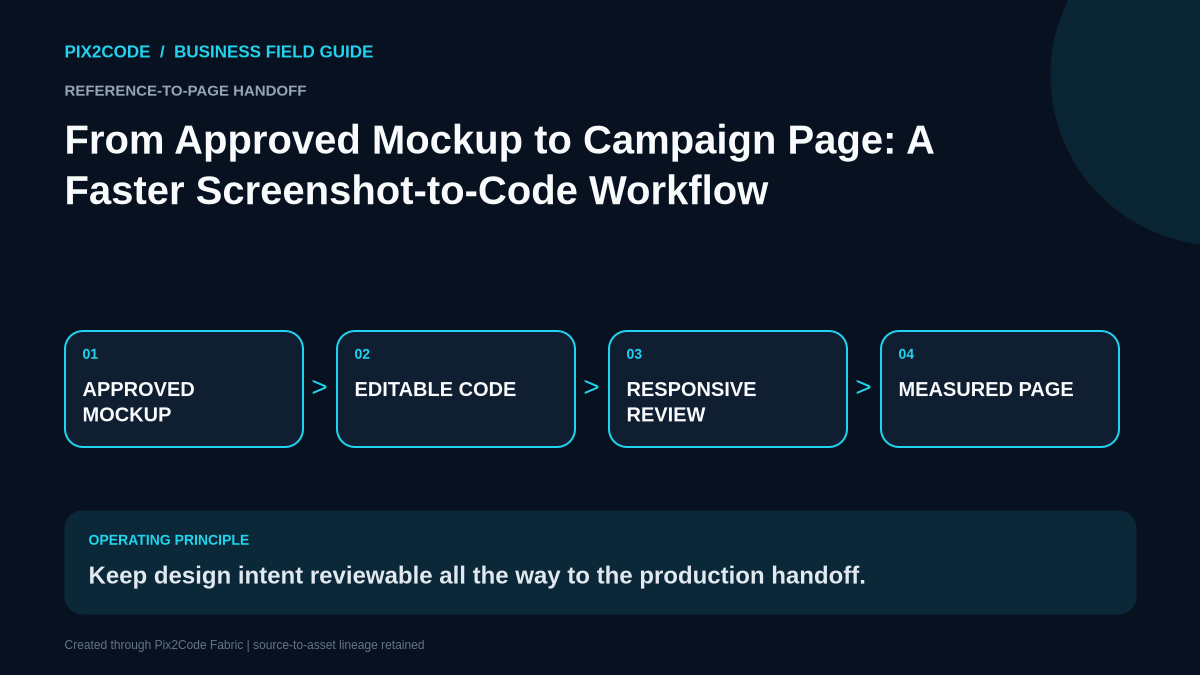
Solving the Campaign Page Fidelity Gap: A Workflow Decision
VP Product Marketing, Head of Web, Digital Experience Directors, and Marketing Technology Leads often face a critical operating decision. Approved campaign concepts frequently lose time and fidelity. This happens as product marketing, design, and engineering teams translate static references into production-ready landing pages. The gap between design intent and live implementation impacts campaign effectiveness and resource allocation. This article outlines a practical approach to bridge this divide.
The Hidden Costs of Traditional Handoffs
Approved mockups lose fidelity during handoff. Static images or PDFs cannot fully convey interactive behaviors or responsive design requirements. Each manual translation step introduces potential errors and delays in landing page production. This directly impacts launch timelines and campaign performance.
Another common pitfall is that tool evaluations over-index on generation novelty. Many new tools promise rapid code generation. Yet, they often neglect the complete workflow from reference capture through editable code. This oversight leaves teams with isolated features rather than integrated solutions.
Finally, campaign pages often ship without reusable decision context. The rationale behind design choices or technical implementations gets lost. This makes future iterations and optimizations inefficient. Teams struggle to understand why certain decisions were made, increasing rework.
Mapping an Evidence-Preserving Workflow
A more efficient screenshot to code workflow maps the entire journey. It starts from reference capture through editable code. This workflow also includes responsive review, analytics readiness, and a clean engineering handoff. This approach ensures fidelity and speed.
#### 1. Reference Capture and Initial Code Generation
The first step involves accurately capturing the source reference. This can be a screenshot, a video recording, or a live URL. Pix2Code Code Studio generates editable frontend code from these references. This preserves a reviewable path from the original reference to the implementation [Source]. The generated code provides a strong starting point for development.
Pix2Code Code Studio generating editable code directly from a static mockup, illustrating the preservation of design fidelity from reference to implementation.
#### 2. Editable Code for Designers and Developers
The output is not just static code; it is editable code. This allows both designers and developers to iterate quickly. Designers can fine-tune visual elements without waiting for full engineering cycles. Developers gain a structured codebase to integrate backend logic. This collaborative environment reduces friction.
#### 3. Responsive Review and Quality Assurance
Responsive design is critical for effective campaign page development. The workflow must include robust responsive review capabilities. This ensures pages render correctly across all devices and screen sizes. Automated checks and visual comparisons accelerate this phase.
Google's Core Web Vitals guidance defines stable user-experience measures for loading, responsiveness, and visual stability. These metrics should remain part of landing-page review [Source]. Integrating these standards into the review process guarantees performance.
#### 4. Analytics Readiness and Handoff
Before launch, campaign pages require analytics integration. The workflow should ensure easy addition of tracking tags and events. A clean engineering handoff includes well-documented code and clear instructions. This allows engineering teams to deploy and maintain pages efficiently. Reusable decision context is embedded directly within the workflow artifacts.
A Practical Diagnostic Checklist for Your Current Workflow
To identify bottlenecks in your current landing page production process, consider these questions:
- Fidelity Loss: Does your team consistently experience approved mockups losing fidelity during handoff to development?
- Review Cycles: How many review cycles are typically needed to align design intent with developed pages?
- Time to Market: What is the average time from final design approval to a live campaign page? Is this acceptable?
- Reusable Assets: Are design components and code snippets easily reusable across different campaigns?
- Developer Burden: How much time do engineers spend translating designs versus building new features?
- Analytics Integration: Is analytics setup a manual, error-prone step in your campaign page development?
- Decision Context: Can new team members quickly understand the rationale behind past design and implementation choices for a campaign page?
- Tool Sprawl: Are your current tools creating more handoffs than they streamline, leading to tool evaluations over-indexing on generation novelty rather than end-to-end impact?
Decision Framework: Choosing a Better Screenshot to Code Workflow
Selecting the right solution for your screenshot to code workflow involves evaluating several factors. This framework helps prioritize what matters most to your organization.
| Criterion | Low Priority | Medium Priority | High Priority |
|---|---|---|---|
| Fidelity Preservation | Manual review acceptable, minor variations tolerated | Automated visual comparison, some manual tweaks expected | Pixel-perfect translation, direct designer-developer iteration |
| Code Editability | Output used as reference only, full rebuild by engineers | Structured, but requires significant refactoring | Clean, semantic, fully editable by frontend developers |
| Responsive Design Support | Separate desktop/mobile assets, manual adaptation | Basic responsive grid, some custom media queries needed | Automatic responsive generation, adaptive components |
| Analytics Integration | Manual tag insertion, post-launch QA | Templated analytics, basic event tracking | Pre-integrated analytics, custom event configuration |
| Handoff Efficiency | Code dump to engineers, verbal instructions | Documented code, some inline comments | Component library, API access for engineers, decision history |
| Learning Curve / Adoption | Steep learning curve acceptable for long-term gains | Requires some training, but intuitive for technical users | Minimal training, immediate productivity for marketing & design |
| Decision Context Preservation | Manual documentation of changes and rationale | Version control system with limited contextual notes | Integrated annotation, automated change tracking, creative decision lineage |
Pix2Code's Role in a Streamlined Workflow
Pix2Code provides a connected implementation path that addresses the core problem of fidelity loss and fragmented workflows. Its Code Studio product is central to this. It automates the generation of editable frontend code directly from various visual references [Source]. This capability significantly reduces the manual effort and time involved in translating designs into live campaign page development. By bridging design and engineering, Pix2Code ensures that approved mockups maintain their fidelity. It also streamlines the responsive review and analytics readiness stages.
An explanatory visual detailing the end-to-end Pix2Code workflow, from initial design capture through code generation, review, and final engineering deployment, ensuring continuous fidelity and context.
This approach minimizes the risk of campaign pages shipping without reusable decision context. It fosters a more coherent and efficient content operation. For organizations evaluating new tools, Pix2Code offers a solution focused on workflow evidence rather than just generation novelty. It helps ensure that your investment drives tangible improvements in your source-to-campaign workflow.
Evaluating Your Operating Decisions for Faster Page Delivery
Your organization's ability to deliver impactful campaign pages quickly is a competitive differentiator. The challenge of approved mockups losing fidelity during handoff is real. The solution lies in streamlining your screenshot to code workflow. For VP Product Marketing, Head of Web, Digital Experience Directors, and Marketing Technology Leads, the operating decision is clear. Before investing in another tool, evaluate the current workflow. Understand where delays and fidelity gaps truly occur. This diagnostic approach will reveal opportunities for a more integrated and efficient landing page production process. It will ensure your next campaign page development project moves faster and with greater accuracy.
A supporting product asset, "Reference-to-page handoff," provides further detail on optimizing this workflow. It covers how to map and improve your process.